RECENT SEARCHES
Recently Viewed
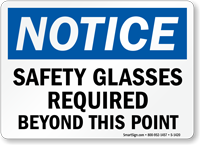
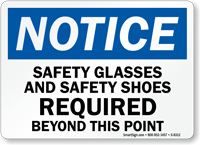
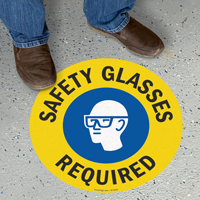
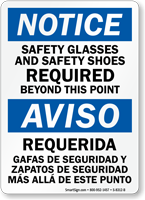
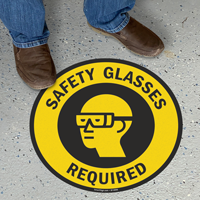
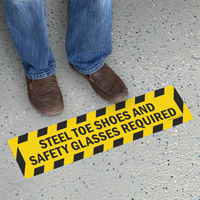
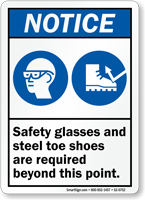
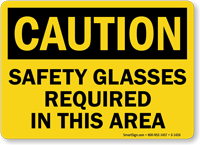
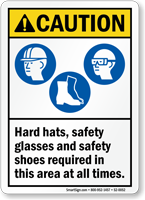
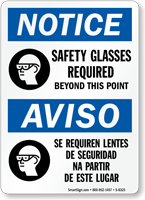
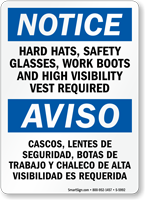
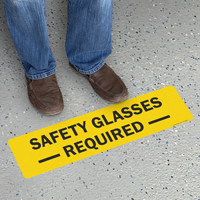
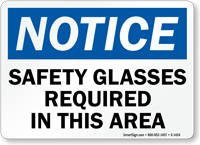
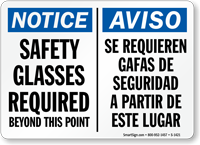
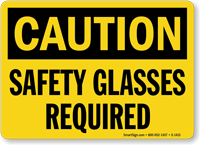
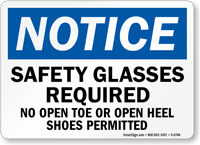
Safety glasses signs are required by OSHA at the entrances to all work areas where employees are exposed to potential eye hazards. This includes, but is not limited to, areas with flying particles, molten metal, liquid chemicals, acids or caustic liquids, chemical gases or vapors, or potentially injurious light radiation.
These eye protection signs serve as a critical administrative control, reminding workers to wear the proper PPE before entering a hazardous zone. Common locations include machine shops, grinding stations, chemical mixing labs, and welding areas. A "Safety Glasses Required" sign is a clear and effective way to enforce this policy, while an ANSI-compliant caution sign can be used for persistent, all-day hazard zones.
The primary standard that applies to eye protection signs is ANSI Z535.2, which dictates the format for environmental and facility safety signs. This standard specifies the use of signal words like "DANGER," "WARNING," or "CAUTION" based on the severity of the hazard, along with corresponding colors and the use of a universal pictogram for "eye protection required."
Complying with these ANSI safety sign standards ensures the message is clear, consistent, and quickly understood by all workers, regardless of language. You can find these principles applied to all ANSI-compliant PPE signs, from a safety glasses message mat at an entrance to a custom ANSI sign that specifies multiple types of required PPE.
Yes, employers absolutely can, and often do, implement universal "safety glasses required" policies that exceed the minimum OSHA requirements. Many companies establish a site-wide policy requiring safety glasses in all areas outside of designated offices or break rooms.
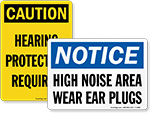
This best-practice approach simplifies training and builds a stronger safety culture. These policies are enforced with signs like a notice, safety glasses required sign posted at all facility entrances, such as a "Safety Glasses Required in This Area" sign. To support this policy, many facilities also install a safety glass dispenser.
An effective eye protection sign must specify the exact type of protection required, as not all eye protection is the same. The sign should be selected based on the specific hazard, as outlined by NIOSH. For example, a "safety glasses" sign is suitable for flying particles, but a "goggles" or "face shield" sign is required for chemical splash or high-impact hazards.
These specific PPE signs remove all ambiguity for the worker. If your facility has grinding operations, a "Wear Goggles" sign is appropriate. For areas with high-volume liquid transfer or severe impact risk, a "Face Shield and Glasses Required" sign may be necessary to ensure complete compliance and safety.
Safety glasses signs are a critical administrative control that directly reduces eye injuries by serving as a constant, real-time reminder at the point of risk. According to OSHA, thousands of workers suffer eye injuries annually, and studies show that the vast majority of these injuries could have been prevented with proper eye protection.
The sign works by interrupting worker complacency. An employee who is focused on a task might forget to put on their PPE when moving from a safe zone to a hazardous one. The safety sign acts as a final checkpoint. By reinforcing this habit, safety first signs are a simple, low-cost tool that prevents accidents. Whether it's a standard caution sign or a more engaging cartoon safety sign, the goal is the same: to make safety an automatic behavior.
Prevent a dreadful accident or injury from taking place with Wear Safety Glasses Signs.
Post one of these in your lab or factory and start making your workplace as safe as possible.
Call our sales team at (800) 952-1457 and get your quote in minutes!
Mon - Fri 8:00am to 7:00pm EST
Best price guarantee. Fast, free shipping.